Mattress Hygiene · Practical Care
Keeping an Obasan Bed Fresh: Safe Spot-Care for Natural Materials
A small spill on a natural mattress can feel like a bigger problem than it is. The safest response is usually quiet and measured: check the care guidance, lift away what you can, use minimal moisture, and give the area time to dry completely.
Published November 19, 2026
A mattress is built for rest, not for repeated washing. That distinction matters especially when a bed is made with natural materials. A quick spot-care routine can help with a fresh mark, but saturating the surface or reaching for a powerful cleaner may create more trouble than the original spill. Moisture can travel beyond the visible spot, linger inside layers, or affect fabric and fill in ways that are difficult to reverse.
For an Obasan bed, begin with the care instructions supplied for the specific model. Mattress construction, upholstery, and removable-cover details can vary, so a method that suits one surface may not be appropriate for another. This guide offers conservative first steps for small, local marks—not a substitute for manufacturer guidance, professional advice, or a cleaning method explicitly approved for your mattress.
The central rule is simple: act gently, keep liquid to a minimum, and do not treat an organic or natural mattress as if it were a washable sheet. A careful response is less about making a stain disappear at any cost than about protecting the bed while addressing the mark as far as safely possible.
Before cleaning, identify what you are dealing with
Pause before applying anything. First remove bedding and any loose items, then look closely at the affected area in good light. Is the mark fresh or dry? Does it appear to be a surface stain, or has liquid soaked through? Is there a noticeable odor? Is the mattress cover removable according to its instructions? These details help determine whether basic blotting is sensible or whether the manufacturer should be contacted.
Find the care label, product paperwork, or current care information for the exact Obasan model. Look for instructions on spot cleaning, removable covers, water exposure, and drying. Do not assume a cover is machine washable merely because it has a zipper, and do not remove a cover unless the manufacturer says it is designed to come off for care. Some coverings are integral to the mattress construction.
If you cannot locate specific instructions, ask the manufacturer or retailer before using water, a cleaning agent, or a home remedy. A short inquiry can prevent a well-intended cleaning attempt from causing discoloration, shrinking, residue, or damage to internal materials. Keep the model name and a description of the mark handy when you ask.
- Fresh, small spill: Blot gently with a clean, dry, absorbent cloth.
- Dry surface mark: Avoid scraping or vigorous brushing; check the care instructions before trying any treatment.
- Large or deeply soaked spill: Stop before adding water and contact the manufacturer for specific advice.
- Persistent odor, visible growth, or recurring dampness: Do not cover the area or rely on fragrance to mask it; seek appropriate guidance.
The first response: blot, do not rub
For a fresh spill, remove the bedding and deal with the liquid promptly. Use a clean, light-colored cloth or plain absorbent paper towel. Press it against the spot, lift it, and repeat with a dry section. The goal is to draw liquid upward into the cloth—not to push it deeper into the mattress.
Rubbing is tempting, particularly when a stain is visible. But friction can spread the mark, work particles into the fabric, or roughen the surface. Start at the outer edge and blot toward the center if the spill has spread. Use steady, modest pressure rather than grinding the cloth into the mattress. Replace a saturated towel rather than continuing with it.
Do not stand, kneel, or press with your full weight on a wet spot. Extra force can drive moisture farther down. Likewise, avoid pouring water onto the stain in an attempt to dilute it. A mattress is thick, and liquid that enters its layers may be hard to remove fully.
Once the visible liquid has been absorbed, inspect the area. If it is still wet, continue blotting with a fresh dry cloth. If the mark remains but the surface is only slightly damp, do not automatically escalate to soap, spray, or a homemade mixture. The next step depends on the care instructions for that specific bed.
Use as little moisture as possible
Water can be useful in some fabric-care situations, but more is not better on a mattress. If the manufacturer’s instructions permit a damp-cloth approach, use a cloth that is only slightly damp—not dripping—and test it first on a small, inconspicuous area if the guidance allows. Dab lightly, then blot with a dry cloth. Do not soak, scrub, or repeatedly wet the same area.
Natural materials do not all respond alike. Cotton, wool, latex, and other components may be combined in layers, and the outer fabric may behave differently from the filling underneath. A spot that looks small on the surface can conceal moisture below. Because construction differs from model to model, broad claims such as “safe for every organic mattress” should be treated with skepticism.
Avoid steam cleaners, carpet-cleaning machines, upholstery extractors, and other equipment that introduces heat, pressure, or substantial water unless the manufacturer specifically approves the method. These tools can make it difficult to control how much liquid reaches the mattress. The same caution applies to hair dryers, heaters, and direct high heat: aggressive drying may affect materials, and it does not guarantee that deeper layers are dry.
Do not use bleach, disinfectant sprays, solvents, or strongly scented products as a default response. A cleaner that works on a hard floor or a washable garment may be unsuitable for mattress fabric. It can leave residue, alter color, irritate sensitive sleepers, or create an odor that lingers. “Natural,” “green,” or “non-toxic” on a label does not by itself establish compatibility with a particular mattress.
Why homemade mixtures need caution
Online cleaning advice often presents vinegar, baking soda, hydrogen peroxide, dish soap, or essential oils as universal fixes. They are not universal. Ingredients can affect dyes, finishes, fibers, adhesives, or other components, and mixtures can leave residue that is hard to remove from a thick mattress. Combining household products can also create unwanted chemical reactions.
Do not apply a homemade mattress cleaner directly to an Obasan bed unless the care instructions confirm that it is suitable. Even a familiar kitchen ingredient may be too acidic, too alkaline, abrasive, or difficult to rinse out. Baking soda, for example, can remain lodged in seams or surface texture if used in excess, while a liquid mixture can add the very moisture the mattress needs to avoid.
If the manufacturer approves a particular cleaner, follow its directions exactly and use only the amount specified. Do not improvise by making it stronger or blending it with another product. Keep the room ventilated, protect your hands if the label recommends it, and keep children and pets away from the treated area until it is dry and safe to use.
Drying is part of the cleaning process
After blotting or any manufacturer-approved spot treatment, leave the bed uncovered until the area is completely dry. Remove wet bedding from the room or wash it separately according to its own care label. Do not put a fitted sheet, mattress pad, or waterproof protector over a damp spot. Covering it can slow evaporation and conceal moisture that still needs attention.
Encourage gentle air circulation. Open a window when outdoor conditions make that practical, or use a fan in the room to move air across the surface. Keep the mattress away from direct heat and avoid placing it in strong sunlight unless the manufacturer says that exposure is acceptable. Do not remake the bed simply because the top feels dry to the touch; a damp area may persist below the surface.
Check the spot periodically rather than relying on a strict drying time. Room temperature, humidity, the amount of liquid, and the mattress construction all affect how quickly moisture evaporates. If the area remains damp, develops an odor, or seems to have absorbed a substantial amount of liquid, contact the manufacturer for guidance. A mattress that is not fully dry should not be treated as ready for normal use.
When a stain needs more than spot care
Some marks are not suitable for a do-it-yourself treatment. A large spill, bodily fluid, a stain that has penetrated the surface, or a mark that keeps returning may require advice specific to the mattress. So can a spill involving a substance that could damage fabric or leave a persistent odor. The safest option may be to stop, document what happened, and ask the maker what it recommends.
If you contact customer support, describe the mattress model, the approximate size and location of the spot, what caused it if known, and what steps you have already taken. Mention any cleaner or amount of water used. Clear information helps avoid repeating a treatment that may not be suitable. If you have not used anything, say so; that gives the manufacturer a clean starting point for its advice.
Visible discoloration alone does not always indicate a hygiene problem, and a strong fragrance is not evidence that a mattress has been cleaned. Avoid layering treatments in an attempt to erase every trace. Repeated applications can build up residue or spread a stain. When the cause is uncertain, or the mattress appears persistently damp, seek direct guidance rather than experimenting.
Prevention makes careful cleaning easier
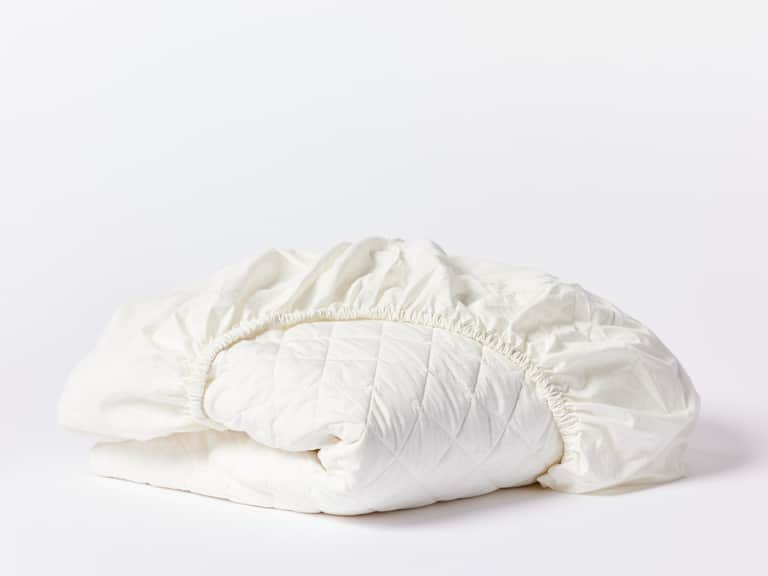
A washable, well-fitted mattress pad or protector can take the first impact of everyday spills, sweat, and surface wear. Choose one that fits the mattress dimensions and depth, and check its own washing directions before use. A breathable cotton pad can add a washable layer, but it should not be assumed to be waterproof. If liquid protection is important, verify that a product is specifically designed and labelled for that purpose.
For example, the Organic Cotton Mattress Pad is described as a machine-washable, 100 percent organic cotton layer with a quilted surface and deep pockets. It can serve as a washable layer between the sleeper and mattress, but its description does not identify it as waterproof. For spill protection, match the product’s stated capabilities to the household’s needs and follow the care instructions for both pad and bed.
Wash bedding on a regular schedule that suits your household, and respond promptly when a pad or sheet gets wet. Keep food and open drinks away from the bed when practical, and consider a lidded cup or stable bedside surface. These are ordinary habits, not guarantees; accidents happen. The point is to reduce how often the mattress itself has to be treated.
A tidy sleep routine also helps spot small problems early. When changing sheets, look for new marks, dampness, or an unusual smell. Early discovery often means less intervention is needed. If you use a protector, check that it lies flat and remains correctly fitted rather than bunching or sliding away from the area it is intended to cover.
A practical spot-care checklist
- Remove bedding. Take off sheets and any removable pad or protector; care for each item according to its own label.
- Check the mattress instructions. Confirm what the specific Obasan model allows before applying water or a cleaner.
- Blot fresh liquid. Use a clean, dry, absorbent cloth and press gently. Do not rub or push liquid inward.
- Keep treatment minimal. Use a damp cloth or approved cleaner only if the instructions permit it; never saturate the mattress.
- Air-dry uncovered. Use gentle room airflow and avoid direct high heat. Wait until the area is fully dry before remaking the bed.
- Stop if the problem persists. For a large, deep, odorous, or recurring mark, ask the manufacturer for model-specific advice.
This checklist is deliberately cautious. Mattress care is not a contest to use the strongest product or the fastest method. With layered construction and varied natural materials, restraint can be the most useful tool in the room.
The takeaway: a clean bed is a protected bed
Keeping an Obasan bed fresh begins with small decisions: read the specific care guidance, blot rather than rub, avoid unnecessary moisture, and let the mattress dry thoroughly. Resist the impulse to treat every mark with a homemade mixture or a heavy-duty appliance. If instructions are unclear, a question to the manufacturer is safer than an experiment.
Routine prevention can do much of the quiet work. Use bedding and protectors according to their purpose, wash removable layers as directed, and look over the mattress when changing sheets. A surface mark may not disappear completely, and that does not automatically mean the bed is unhygienic. Protecting the materials and avoiding trapped moisture matter more than pursuing a spotless appearance at any cost.
In a bedroom, care is often unremarkable: a quick blot, a dry cloth, an open window, a little patience. Done thoughtfully, those modest steps can address minor accidents while respecting the natural materials and construction of the bed.