Bedding care · Nursery hygiene
Naturepedic Organic Crib Sleep Surfaces: Care and Protection Essentials
A crib mattress is asked to do two things at once: provide a safe, stable sleep surface and withstand the spills and small surprises of daily life. The simplest care routine is often the best one—follow the manufacturer’s instructions, limit moisture and soil with compatible bedding, and let every cleaned surface dry completely before use.
Published November 3, 2026
Why care starts with the sleep surface
An organic crib mattress may contain materials and construction details that call for particular care. “Organic” describes certain materials or production standards; it does not mean a mattress should be washed, soaked, sprayed, or treated like a washable blanket. The core, cover, seams, and any moisture barrier can respond differently to water, heat, friction, and cleaning products. A method that seems gentle on one material may damage another.
That is why the care label and the manufacturer’s current instructions matter more than a generic cleaning recipe. Before using a new mattress or protector, take a moment to identify the model and read its guidance. Keep the information somewhere accessible, such as in a household care folder or saved on a phone. When instructions are unclear, contact the manufacturer rather than experimenting on a surface used by an infant.
Good maintenance is also preventive. A fitted sheet and, where the mattress maker permits it, a compatible protective layer can reduce routine contact with sweat, spills, and everyday soil. This approach helps avoid frequent direct cleaning, which can introduce unnecessary moisture and may affect materials. The goal is not to make the crib sterile. It is to keep the sleep surface clean, dry, intact, and used as intended.
Safe sleep comes before extra padding
Care decisions should preserve the mattress’s intended sleep characteristics. For infant sleep, widely recognized safe-sleep guidance emphasizes a firm, flat surface with a fitted sheet and an otherwise clear crib. Do not add pillows, loose blankets, quilts, positioners, or soft toppers to make the surface seem more comfortable. Do not place an improvised cushion or absorbent layer beneath the sheet.
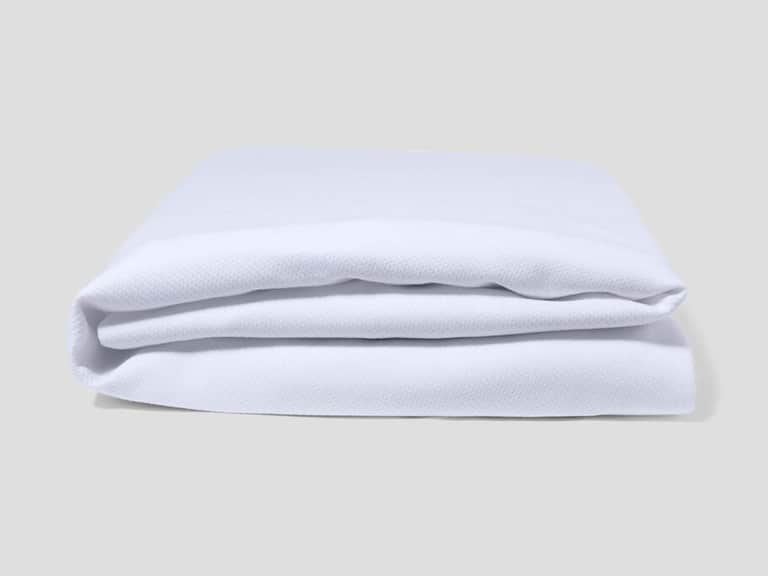
Protective products are not interchangeable. A waterproof pad, encasement, mattress cover, or protector should be used only if it is designed for the particular crib mattress and permitted by the mattress manufacturer. It must fit securely and must not bunch, create a soft or uneven area, interfere with the mattress fit, or alter the sleep surface. If a product’s compatibility or intended use is uncertain, ask the manufacturer or the child’s health-care professional before using it.
Check that the mattress fits the crib as intended and that bedding remains snug. A protector is not a reason to add extra layers or loosen the fitted sheet. As the child grows and the crib is adjusted, continue to follow the crib and mattress instructions. Safe-sleep recommendations can be updated, so caregivers should consult current guidance from trusted pediatric and public-health organizations.
A practical prevention routine
Most mattress care happens before a spill. Use a fitted crib sheet that matches the mattress size and remains secure at the corners. Keep spare sheets nearby so a soiled one can be changed promptly without leaving a damp layer in place. If the manufacturer approves a protective layer, select one specifically intended for that mattress and crib use; confirm its fit and care directions before the first night.
During regular sheet changes, take a brief look at the mattress surface and edges. Notice any dampness, visible soil, unusual odor, loose stitching, cracking, or change in shape. A quick inspection makes it easier to catch small problems before they become harder to address. It also helps distinguish a removable sheet spill from a problem that has reached the mattress itself.
- Change wet or soiled bedding promptly, and wash it according to its own care label.
- Keep the mattress and crib area dry; do not remake the bed while any layer is damp.
- Use only a fitted sheet and manufacturer-approved protective layers that fit securely.
- Keep cleaning agents, sprays, and fragrance products away from the crib unless the mattress instructions specifically permit them.
- Inspect the mattress and protector periodically for wear, damage, or a poor fit.
This routine is intentionally modest. Strong scents, elaborate disinfecting rituals, and repeated surface treatments are not substitutes for the correct fit, clean bedding, and careful drying. If the mattress appears damaged or its protective surface has been compromised, seek advice from its manufacturer about whether it remains suitable for use.
Before cleaning: read the label, identify the layer
When a spill occurs, first work out what became wet. The sheet may be washable, while a protector may have separate instructions and the mattress may allow only limited spot care. Remove bedding carefully so liquid does not spread to the mattress or floor. If a separate protective layer is in use, check its label before washing or drying it; waterproof membranes, elastic, quilting, and natural fibers can have different limits.
Next, check the mattress care label or the maker’s instructions for approved cleaning methods. Look for directions about spot cleaning, water temperature, detergents, drying, and prohibited treatments. Some mattresses are not intended to be washed or saturated. Avoid assuming that a product is safe because it is labeled natural, organic, gentle, or suitable for household cleaning. Ingredients and application methods still matter.
Do not use bleach, solvents, essential oils, disinfectants, steam, or a scented spray unless the manufacturer explicitly allows that treatment. Do not combine cleaning products. Mixing chemicals can create harmful fumes or reactions, and an unapproved product may leave residue or damage a cover. If the instructions do not address the spill or the label is missing, pause and contact the manufacturer for guidance.
Handling a spill with care
There is no single cleaning formula that suits every organic crib mattress. The following sequence is a cautious framework, not a replacement for the mattress-specific directions. If the manufacturer advises a different process, follow its instructions.
- Remove the bedding. Take off the fitted sheet and any removable protector without dragging wet fabric over a larger area. Put washable items aside for care according to their labels.
- Blot, do not scrub. If the mattress maker permits surface cleaning, use a clean, dry, absorbent cloth to lift moisture with gentle pressure. Rubbing can spread a stain or abrade the fabric.
- Use only an approved method. If spot cleaning is permitted, follow the specified cleaner, amount, and technique. Apply the least moisture needed. Avoid pouring liquid directly onto the mattress or soaking the material.
- Remove residue as directed. Some instructions may call for a lightly damp cloth after cleaning; others may prohibit additional water. Do not add a rinse step unless it is allowed.
- Dry completely. Leave the surface uncovered in a well-ventilated place, following any instructions about air circulation or positioning. Do not use a heater, hair dryer, or direct high heat unless the manufacturer specifically says to.
- Inspect before remaking the crib. Check the top, edges, seams, and underside if accessible and permitted. The surface should be fully dry and free of obvious residue before approved bedding is put back on.
Drying is not a cosmetic finishing step. Trapped moisture can contribute to odors or material deterioration, and a damp mattress should not be covered and returned to use. If moisture has penetrated deeply, if an odor persists, or if you cannot verify that the surface is dry, ask the manufacturer what to do next.
Protectors: useful only when compatible
A compatible protective layer can help reduce the amount of everyday soil that reaches a mattress. Yet protection depends on the product’s construction, fit, and care. A layer that slips, wrinkles, or changes the feel and firmness of the sleep surface is not a good solution. Nor should a protector be treated as a substitute for a fitted sheet or as permission to add several layers.
For a Naturepedic organic crib sleep surface, verify compatibility with the exact mattress model rather than relying on a broad claim that a product fits “most cribs.” Confirm the dimensions, mattress depth, intended use, and washing instructions. If the mattress maker recommends a particular type of protector, use that guidance. If it does not approve additional layers, do not assume one is harmless simply because it is thin or marketed for babies.
After laundering, inspect the protector for tears, stretched elastic, separated seams, or a damaged waterproof barrier. Follow the drying instructions closely. High heat or harsh detergents can shorten the life of some fabrics and membranes. Replace a protector that no longer fits smoothly or securely, and do not try to repair a damaged layer with tape or an unapproved patch.
Common mistakes to avoid
When a crib surface is soiled, urgency can lead to over-cleaning. A restrained response is usually safer than improvisation. Avoid these common missteps:
- Soaking the mattress: Excess water can move beyond the surface and take a long time to dry.
- Using an untested household recipe: Vinegar, baking soda, essential oils, and other popular DIY ingredients are not automatically suitable for mattress materials or infant sleep surfaces.
- Applying fragrance to mask an odor: Perfume and deodorizing sprays do not resolve the source of a spill and may leave residue.
- Using heat to speed drying: A radiator, heated appliance, or direct sunlight may affect some materials. Follow the specific care instructions.
- Putting bedding back too soon: A cover can hide remaining dampness. Wait until the mattress is fully dry.
- Adding extra padding after a leak: A softer or loosely fitted layer can change the sleep surface and introduce avoidable risk.
When a stain remains after an approved cleaning attempt, do not escalate automatically to stronger chemicals or more water. Ask the manufacturer whether further treatment is appropriate. Some marks may be cosmetic; a damaged, persistently wet, or compromised mattress requires more careful assessment.
A simple maintenance schedule
There is no need to clean a crib mattress on an arbitrary weekly schedule if it is clean and dry. A sensible plan ties care to ordinary household routines and visible conditions:
- At each sheet change: Check for moisture, marks, loose seams, and a protector that has shifted.
- After any spill: Follow the manufacturer’s cleaning directions, then allow complete drying before use.
- Periodically: Review the mattress and protector labels, confirm fit, and inspect for damage or wear.
- After laundering a protector: Make sure it is fully dry and still fits securely before reinstalling it.
- When moving or storing the mattress: Follow the maker’s instructions for handling, orientation, and storage conditions.
Seasonal deep cleaning is not automatically necessary. More cleaning does not always mean better hygiene, especially when it adds moisture or introduces unapproved products. The best schedule is one that keeps the mattress visibly clean and dry while respecting its construction and intended use.
When to contact the manufacturer
Reach out to Naturepedic or the mattress manufacturer when the care label is unavailable, a spill has soaked through several layers, an odor remains after approved care, or the mattress shows damage. Ask directly which products and methods are permitted for the exact model, whether a protective layer is compatible, and whether a wet or damaged mattress can continue to be used.
Keep the model name, purchase information, and a clear description of the problem available. If you contact customer support, describe what was spilled, how much moisture reached the mattress, and what cleaning steps—if any—have already been taken. Avoid further treatment while waiting for specific guidance. This prevents a small incident from becoming a larger materials problem.
If there is any uncertainty about whether a mattress remains safe for an infant, do not rely on odor or appearance alone. Seek guidance from the manufacturer and, when appropriate, the child’s health-care professional. A mattress should be used according to its instructions, not repaired or altered through guesswork.
The essentials, in brief
Caring for an organic crib sleep surface is less about intensive cleaning than about preserving what the mattress was designed to do. Read the label before acting. Use a fitted sheet and only a protective layer confirmed as compatible. For spills, remove bedding, blot gently if permitted, use an approved method, and allow the mattress to dry fully. Avoid unapproved sprays, mixtures, heat, and extra padding.
These steps are practical rather than elaborate, and that is their strength. A clean nursery does not require turning a crib mattress into a household cleaning project. It requires attention to fit, timely changes, careful handling of moisture, and respect for the manufacturer’s directions. When in doubt, stop, check the instructions, and ask the maker before proceeding.
Frequently asked questions
Can I use a homemade cleaner on an organic crib mattress?
Only if the mattress manufacturer specifically permits the ingredients and method. “Natural” ingredients are not necessarily suitable for every mattress material, and a DIY mixture may leave residue or add excess moisture. Check the care instructions first.
Can I use a waterproof protector?
Use one only if it is compatible with the exact mattress and permitted by the manufacturer. It must fit securely without bunching or changing the intended sleep surface. Follow the protector’s own laundering and drying directions.
How long should I wait before putting the sheet back on?
Wait until the mattress is completely dry, including seams and edges that may have received moisture. Follow the maker’s drying instructions. If you cannot tell whether moisture remains, contact the manufacturer rather than covering the surface.
Should I disinfect the mattress regularly?
Routine disinfection is not a substitute for following care instructions and is not appropriate for every mattress. Do not apply disinfectants, steam, or other treatments unless the manufacturer expressly approves them for that model.